

WHAT IF… We Required More of our Courts?
What if all federal judges consistently applied the law and Constitution faithfully - rather than rewriting or creating law aligned with their personal or political preferences?

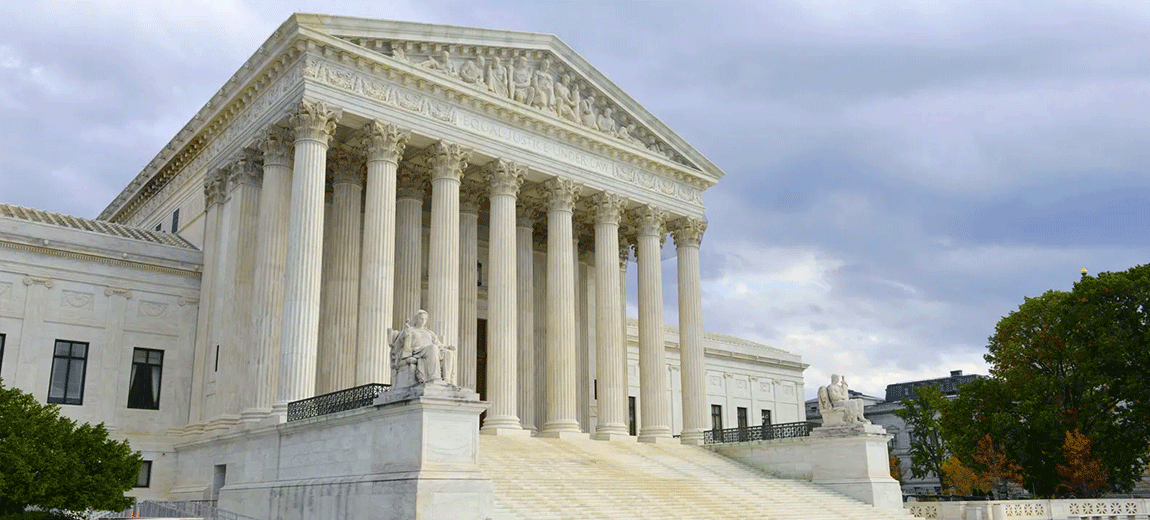
This is the third in our series of Commoners’ Corner posts exploring the vision of Simple Liberty - and the last of three examining the branches of government our Founders designed to serve us, not rule us.
In Posts #1 and #2, we examined the Executive and Legislative branches. The pattern we found was the same in both: Institutions brilliantly designed for the common good - but now too often corrupted for personal power, profit, and ruling class advantage - across both parties, spanning decades - on our watch.
The Judicial Branch has similar challenges because power can corrupt.
One distinct difference in the Judicial branch from the Executive and Legislative branches is that presidents have term limits and can be voted out - and members of Congress can be defeated at the polls.
Currently, federal judges - once confirmed - serve for life. This has challenges, which should be discussed.
However, there is a bigger concern and challenging question: How can Supreme Court justices be held accountable for applying the Constitution rather than twisting it based on personal preference, profit, or power?
Most solutions proposed to date - even those most well-intended - could simply transfer the corruption to an oversight group.
Our concerns are, how can the Supreme Court - and the entire federal judiciary - stay tightly aligned with its constitutional mandate? Many justices at every level - from district courts to the Supreme Court - have increasingly stopped applying the Constitution and the law - and started making it.
For this reason, judicial appointments have become political battlegrounds where the stakes of every appointment feel permanent and irreversible - because they are.
When judges legislate from the bench, citizens lose rights and freedoms.
When courts can rewrite the Constitution without going through the amendment process our Founders wisely established, self-governance is an illusion.
This is not a left problem or a right problem. Both parties have:
Appointed judges who exceeded their constitutional authority.
Manipulated the confirmation process for political advantage.
Benefited from and complained about judicial bias and overreach, depending on which direction the ruling went.
The primary problem is not which party controls the courts. Both can be biased and corrupt. The problem is that the courts have stopped obeying the Constitution and laws they have sworn to uphold.
One example of this party versus party madness is the recent wave of redistricting for political party advantage. One party has done it more than the other. The other party claims foul, but has some party leaders rushing to lower their standards and do the same thing - rewrite voting districts in questionable ways because the other party has done so.
This is not the answer.
A note before we begin: The federal judiciary is not just the Supreme Court. It is a three-tier system - district courts at the base, circuit courts of appeals in the middle, and the Supreme Court at the top.
The problems exist at every level, often worse in the lower courts where there is less scrutiny. Our seven What If questions address the full system, not just its most visible nine members serving in our Supreme Court.
THE UNCOMFORTABLE TRUTH
We love judicial bias when it agrees with us, and hate it when it doesn’t.
When a court rules in favor of something we believe in - we call it justice.
When it rules against us - we call it unfair or corrupt.
This selective outrage is indicative of fear perverts our judicial system. One party selfishly relishes the rewards of judicial violations of duty in their favor, while the losing party awaits an opportunity for revenge.
In contrast, Simple Liberty seeks to require our courts to do what’s best for the common good with clear reference to our Declaration, Constitution, and laws properly established therein.
Our laws and courts must deliver true justice - equal rights for all.
Here are seven What If questions about our federal courts. These are not radical demands. They are reasonable standards for an institution our republic depends upon to apply justice faithfully, transparently, and without fear or favor.

#1 - WHAT IF… Character Actually Mattered?
What if we only confirmed federal judges who were people of proven good character - totally committed to faithfully applying the Constitution and the law, regardless of who appointed them or which party would prefer a different outcome?
The pattern should be familiar by now. We asked this same question about our presidents in Post #1 and about members of Congress in Post #2.
We ask it again here because the answer is the same: Without good character at the foundation, every structural reform is a sandcastle. Rules only constrain bad actors until they find ways around the rules - whereas character constrains people from within.
A judge of good character understands that the robe is not a license. It is a responsibility. The moment a judge begins reasoning backward from a preferred outcome to a legal justification, they have stopped being a judge and started being a powerful member of the ruling class in disguise.
This is particularly dangerous, because politicians can be voted out and it is easier to lock-up a politician or common citizen than a judge.
We have had judges of impeccable character. Not perfect ones, but principled ones - jurists who ruled against the appointing party’s preferences because the law required it. Who recused themselves from cases where their impartiality could be questioned and who wrote opinions that explained their reasoning transparently as they applied the Constitution and law as written - rather than as they wished it had been written.
They exist today too, at every level of the federal judiciary, in judges appointed by both parties. They are the standard we should demand for every nominee - more than ideological compatibility, demographic representation, and political reliability.
We are grateful for judges who demonstrate courageous good character. That is the standard - and it is worth demanding.
ENDNOTES: 1-3
#2 - WHAT IF… Judges Applied the Law Instead of Making Law?
What if every federal judge understood - and was daily held to - the constitutional boundary between applying the law and manipulating it?
This is the foundational corruption of the modern federal judiciary.
It must be named clearly: Judicial legislation from the bench is not interpretation. It is unconstitutional.
Our Constitution establishes three separate branches of government with distinct roles for a reason. The Legislative - Congress - makes the law. The Judicial - our courts - apply it. The Executive - the president - enforces it.
When courts invent rights the Constitution never granted, or ignore rights it plainly protects - substituting personal opinion for the text and its original meaning - they are unconstitutionally revising law. The cause may be bias, incompetence, or cowardice.
This has happened on the left and on the right. Courts have expanded federal power beyond constitutional limits and contracted it below them. They have claimed rights the Founders never wrote and dismissed rights our Founders explicitly protected.
The common thread is not ideology - it is trading judicial commitment to the common good for personal gain - power, profit, or self-vindication.
The remedy is not a different ideology on the bench. It is a restored commitment to the actual job of applying the Constitution for the common good instead of themselves. Judges must ask not what the law should say, but what it does say - and consider the context when the Constitution was written.
Where the law is silent or ambiguous, the answer is not judicial invention - it is legislative action or, where the Constitution needs updating, the amendment process.
Simple Liberty is clear on this point: The courts are not a shortcut around the democratic process.
Our Constitution and laws require our Judicial branch - all of it - to be guardians of our civil society.
ENDNOTES: 4-6
#3 - WHAT IF… All Judicial Appointments Had Reasonable Age Boundaries?
What if we established minimum and maximum age boundaries for federal judicial appointments - confirming judicial power requires both the wisdom that comes with experience, and the mental acuity that justice demands?
Our culture has developed two contradictory obsessions that both produce bad outcomes.
On one end, we increasingly romanticize youth - assuming that energy and charisma are substitutes for wisdom, experience, and tested character. They are not. A brilliant young legal mind is not the same as a seasoned jurist or attorney who has spent decades applying the law, making mistakes, learning from them, and developing the judgment that only experience can produce.
On the other end, lifetime appointments with no age accountability have produced federal judges serving although visibly diminished - physically, mentally, and emotionally - with no mechanism for removal short of the nearly impossible standard of impeachment.
Let’s discuss a reasonable standard: Minimum ages to become a federal judge, including Supreme Court justices, and the age they should transition from active service. For instance:
Minimum of forty-five years in age is long enough to validate genuine life experience and tested character. Possibly there should also be a standard of experience in law, either as a judge or attorney.
Eighty or eighty-five years old might be a good standard for retirement. There should be some age that protects the courts from being held hostage to the physical and cognitive realities that advanced age inevitably brings - for all of us, regardless of how brilliant we once were.
Yes, some people now remain physically and mentally healthy into their eighties and nineties, but that is a minority. Our standards cannot be solely based on exceptions, but rather what’s most common.
This is not disrespectful to older Americans. It is the honest facts and historical truth about human limitations and serious about the demands of judicial service. We apply age and fitness standards to airline pilots, military commanders, and surgeons.
The people responsible for interpreting our Constitution and laws deserve at least the same thoughtful standards.
ENDNOTES: 7-9
#4 - WHAT IF… Judges Were Held to a Binding Ethics Code?
What if every federal judge - including every Supreme Court justice - was subject to a binding, enforceable ethics code with real consequences for violations?
Until 2023, the Supreme Court operated without any formal ethics code at all. The code adopted that year is voluntary and lacks meaningful enforcement.
Lower federal judges are subject to a code, but enforcement is handled internally - by other judges - making accountability biased, extremely limited, and open to corruption.
Changes should be discussed for every level of the federal judiciary.
Ethics Code: A binding ethics code should address behavior and financial conflicts of interest directly. Judges must not hear cases involving companies in which they hold stock, firms that employ their family members or close friends, or issues involving political donors who funded efforts connected to their appointment.
Annual Audits: What if annual financial audits of judges and elected officials were the norm? Financial disclosure must be complete, accurate, and possibly the summaries made publicly accessible - not selectively reported or buried in exemptions.
Recusal Standards: Mandatory recusal standards must be clear, objective, and enforced without regard to party or issue. The current system - where judges rule on their own recusals - is a conflict of interest in itself. An independent oversight body with genuine enforcement authority is needed.
Imbalance: The ethics code should also address the growing imbalance in some of our circuit courts. Today, some appellate courts are so ideologically biased that they fail to operate as neutral appellate bodies. They blatantly act as enforcement arms of the ultra-left or right - rather than our Constitution, laws, and the common good of all citizens.
We make this observation about the pattern, not specific courts or judges - both ends of the political spectrum have produced courts that fail to demonstrate consistent judicial neutrality.
Disparity: Sentencing disparity across circuits and judges raises similar concerns about equal justice under law - the same crime should not produce vastly different sentences based on geography, the luck of judicial assignment, and/or a person’s heritage, faith, sex, age, or political beliefs.
ENDNOTES: 10-12

#5 - WHAT IF… We Removed Ethical Transgressions by Attorneys?
What if the federal court system also enforced tighter, more fair boundaries involving attorney misconduct that corrupts cases before they ever reach a judge?
The integrity of the judicial system depends not only on judges, but on the lawyers who appear before them. Four attorney-driven abuses have become so common and damaging that they deserve specific attention.
Forum Shopping: This is the deliberate practice of filing cases in specific judicial districts - or even specific single-judge divisions - to obtain a favorable ruling.
This has become a sophisticated litigation strategy, used systematically by plaintiffs on both sides of the political spectrum. Single district court judges in certain divisions have issued nationwide injunctions blocking federal policy for the entire country - not because the law demanded it, but because the case was steered to them by lawyers who knew what ruling they would get.
This is not justice. It is judge selection to present your case to a judge who shares the attorney and/or plaintiff’s bias.
Class Action Abuse: This has transformed federal courts into vehicles for massive settlements that enrich plaintiffs’ attorneys, while delivering pennies to the citizens the lawsuits claimed to represent.
These get-rich-quick schemes by attorneys must stop.
Judicial “rubber stamp” approval of these settlements too often profits the legal profession far more than the public. Reform must limit the amount of awards; severely limit payouts to attorneys - today, often 50% of the award; and only allow class action lawsuits that genuinely serve the plaintiffs they claim to represent.
Attorney Misconduct: Prosecutors may withhold evidence, make improper arguments, and commit other violations of defendants’ rights. This unfairly, disproportionately harms ordinary citizens who lack the resources to fight back.
Both prosecutors and defense attorneys have a duty of candor to the court - meaning they are prohibited from knowingly presenting false evidence or misleading the court about the facts.
Violations are inconsistently enforced and once proven - rarely carry meaningful consequences.
What if judges were required to sanction attorneys - prosecutors and defense attorneys alike - who violate their duty of candor?
What if concealing or misrepresenting evidence carried automatic penalties, regardless of which side of the case the attorney represented?
The goal is not to eliminate vigorous legal representation. It is to make certain the pursuit of justice is grounded in protecting the rights of all citizens, and consideration of the facts - all facts - rather than allowing an advantage to whomever is most skilled at hiding them.
ENDNOTES: 13-15
#6 - WHAT IF… Congress Fulfilled Its Oversight Role Without Political Bias?
What if Congress took seriously its constitutional responsibility to oversee the federal judiciary - and reformed the confirmation process to serve justice rather than partisan advantage?
The confirmation process for federal judges has become one of the most corrosive spectacles in American political life - it’s embarrassing. Both parties bear responsibility for its deterioration.
Republican-controlled Senates have strategically blocked Democratic nominees from receiving hearings or votes, leaving courts understaffed for years.
Democratic-controlled Senates have used confirmation hearings as ideological auditions, demanding that nominees signal their positions on politically charged cases prior to considering a single argument.
Both approaches treat the judiciary as a political prize to be won rather than an institution to be staffed with qualified, principled jurists. Both parties abandon the common good to achieve political gain.
The consequences fall on ordinary citizens. Federal court vacancies create backlogs. Backlogs mean cases that drag on for years. Justice delayed is often justice denied - and it most hurts Americans who cannot afford to wait.
Currently there are over 60 federal court vacancies across the country. In some districts, civil cases routinely take three to five years to reach trial. For an ordinary citizen - unable to afford years of legal fees while awaiting justice - that delay is effectively a denial. The wealthy and powerful ruling class can wait. Most Americans cannot.
Reform must address the confirmation process on both ends. Nominees deserve timely hearings and votes regardless of which party controls the Senate.
Hearings must focus on qualifications, judicial philosophy, and demonstrated character - not on extracting political commitments that compromise judicial independence before a judge takes the bench.
What if Senate rules required a confirmation vote within 90 days of nomination - no exceptions, no delays based on the political calendar? A nominee left in limbo for a year or more is not a neutral act. It is a political weapon wielded against the citizens who need those courts staffed and functioning.
Congress also has the authority - and the obligation - to exercise oversight of the judiciary through legislation. Where courts have exceeded their constitutional boundaries, Congress can and should act to clarify those boundaries through legislation.
This is not an attack on judicial independence. It is a recommended review - and strengthening - of the checks and balances system to confirm the federal judiciary is working as our Founders designed it.
Congress should also revisit the practice of “court stripping” - the constitutional authority to limit the jurisdiction of lower federal courts on specific issues. Used responsibly, this is a legitimate check on judicial overreach.
Used irresponsibly, it becomes its own form of political manipulation. The standard must always be the same: Does this serve the Constitution and the common good, or does it serve a party?
The judiciary serves the people. To do so, it needs oversight because it is populated with imperfect humans. Congress must never forget that.
ENDNOTES: 16-18
#7 - WHAT IF… We Strengthened the Basics of Judicial Accountability?
Power without accountability corrupts. We have seen it in presidents who treat the office as a personal enterprise. We have seen it in members of Congress who treat public service as a career of self-enrichment.
The federal judiciary is not immune - and several structural features of our current system create opportunities for abuse that reasonable reforms could close.
Here are three that demand immediate consideration, plus one fundamental question worth asking.
Clear Opinions: Judicial opinions must be written in a manner that can be understood by the typical citizens they affect. The law belongs to the people, not to the legal profession. Opinions that are inaccessible to ordinary citizens - buried in legal jargon, unnecessarily complex, or opaque about their actual reasoning - undermine the public trust that the judiciary depends upon for its legitimacy.
This does not mean oversimplifying complex legal questions. It means writing with the citizen in mind, not the law review.
Shadow Docket: The Supreme Court’s shadow docket - a growing practice of issuing significant rulings without full briefing, oral argument, or detailed written opinions - must be examined and limited if it is violating the intent of our Constitution.
Major decisions that affect millions of Americans deserve the full deliberative process the Court was designed to provide. Emergency procedures should remain for genuine emergencies, not as a shortcut around the transparency the public is owed.
Injunctions: The ability of a single district court judge to issue a nationwide injunction blocking federal policy for the entire country is a structural problem that both parties have exploited depending on who holds power.
One judge in one district should not have the unilateral authority to govern over three hundred million Americans. This authority should be examined, debated, and appropriately limited through legislation - possibly not eliminated entirely, but constrained to prevent the forum-shopping-driven abuse it has enabled.
Taken together, these structural reforms share a common purpose: Make the federal judiciary more transparent, more accountable, and more aligned with its constitutional role - without compromising the judicial independence that protects all of us from the political winds of the moment.
Independence and accountability balance - not replace - each other. The greatest judiciaries in history have been both.
Ours can be too.
ENDNOTES: 19-21

The Mountain Ahead
Let’s be candid about what we are asking.
Reforming the Executive Branch means changing the behavior of one person in one office.
Reforming Congress means changing the culture of 535 elected officials.
Reforming the federal judiciary means changing an institution of more than 870 judges - appointed for life, none directly elected, all operating inside a legal culture that has built its own self-protective instincts over two centuries.
This may be the steepest mountain of the three - yet the same truth that carried the first two posts carries this one: The people hold the power, when we choose to use it.
We have never voted for a single federal judge - and we never will. We do, however, choose the President who nominates them, and the Senators who confirm them. This is another reason every vote counts.
Too many of us are not voting - and every uncast vote forfeits power to the powerful.
The largest bloc in America is not the left or the right. It is the people who stayed home. In 2024, roughly 89 million eligible Americans did not vote - more than voted for either candidate. The most powerful force in the country sat on the sidelines, convinced their voice did not matter.
They were mistaken.
Consider what that silence surrenders. There are more than 870 lifetime federal judgeships, and a single presidential term now routinely fills over 200 of them - plus seats on the Supreme Court. Those judges rule for decades after the president who named them has left office.
Presidential elections turn on a whisper - about 78,000 votes across three states in 2016, some 43,000 in 2020. The people who stay home don’t just sit out one election. They shape the courts for a generation.
Hear this clearly: The answer is not violence, and it is not a civil war. The people who profit from our division would like nothing better than for citizens to turn on one another - it would be their excuse to seize more power and strip away our freedoms. We will not give them the satisfaction.
The answer is older, harder, and far stronger:
We engage - neighbor to neighbor, voter and non-voter alike - with truth, hope, integrity, and transparency.
We stay informed about the judges, nominees, and cases that quietly shape our lives.
We insist, through our senators, that no one reaches the federal bench who cannot show the character and restraint our republic requires - regardless of party.
The common thread across all three branches is now visible. The disease is the same: Institutions built for the common good, then captured by people who discovered they could use them to serve themselves, their allies, and their class - at the expense of the commoners those institutions were meant to serve.
The cure is the same: It begins with us.
Self-governance is not a spectator sport.
The cost is small - a little of our time, attention, and action. We cannot wait. American citizens must now show up as responsible stewards of our freedom and close the door in tyranny’s face.
We can do this.
This post concludes our key current ideas for our three branches of government - the one who enforces the law, the many who make the laws, and the courts who interpret our laws. Each was carefully designed to check the others. Each has drifted from its purpose. Each can be restored.
Structure alone cannot save a republic. Revolutionary transformation occurs when the courageous good character of active citizens prevails - when we hold our government accountable. Our common values and virtues are where we turn next.
P.S.
The only hope for America is to restore our covenant to common values, our federal government’s wise three-branch design, and the founding solutions we have abandoned or allowed to be corrupted. Not socialism, communism, a dictatorship, or a monarchy.
A republic where there are true equal rights for all.
Renewal requires us to strengthen our character, protect our rights, and gratefully steward the people’s government for the common good.
Simple Liberty unites everyday Americans to research the facts behind our nation’s biggest problems and develop solutions for the common good - because politicians and billionaires won’t do it for us.
ENDNOTES
These references are meant to introduce you to the data, not provide every source. We encourage you to explore more on your own, and welcome your submissions as comments on this post.
#1 - WHAT IF… Character Actually Mattered?
(1) The Founders Made Character the Core Qualification for Judges
Against Judicial Supremacy: The Founders and the Limits on the Courts. The Heritage Foundation - The founders deliberately tied a judge’s lifetime tenure to the standard of “good behavior,” and Alexander Hamilton, in Federalist No. 78, praised “the benefits of the integrity and moderation of the judiciary,” warning that a judiciary lacking that character would “sap the foundations of public and private confidence.”
Hamilton’s point was that judicial power is safe only when “the judge unites integrity with knowledge” - character first, competence second. The founders did not assume good judges; they demanded them. | https://www.heritage.org/courts/report/against-judicial-supremacy-the-founders-and-the-limits-the-courts
(2) Public Trust in the Courts Has Collapsed to Record Lows
Americans Pass Judgment on Their Courts. Gallup - American confidence in the nation’s judicial system and courts fell to a record-low 35 percent in 2024 - a 24-point collapse since 2020, one of the steepest drops for any country’s courts that Gallup has measured worldwide.
For the first time on record, more Americans trust the honesty of their elections (51 percent) than trust their judicial system (35 percent). Because the judiciary “relies largely on the public’s confidence to protect its authority and independence,” this erosion is not a side issue - it is a direct threat to the rule of law. | https://news.gallup.com/poll/653897/americans-pass-judgment-courts.aspx
(3) Federal Law Requires Judicial Character by Code
Code of Conduct for United States Judges. Administrative Office of the U.S. Courts - The federal judiciary’s own governing code makes character a binding requirement, not an aspiration. Canon 1 commands that “a judge should maintain and enforce high standards of conduct and should personally observe those standards.”
Canon 2 requires that “a judge should avoid impropriety and the appearance of impropriety in all activities,” and that a judge “should not allow family, social, political, financial, or other relationships to influence judicial conduct or judgment.” The standard the founders demanded is written into law - the failure is in enforcement, not definition. | https://www.uscourts.gov/judges-judgeships/code-conduct-united-states-judges
#2 - WHAT IF… Judges Applied the Law Instead of Making Law?
(4) The Judiciary’s Duty Is to Apply the Law, Not Write It
Marbury v. Madison and Judicial Review. Constitution Annotated, Library of Congress - The foundational 1803 Supreme Court decision defines the judicial role and its limits. Chief Justice John Marshall wrote that “it is emphatically the province and duty of the judicial department to say what the law is” - to interpret and apply, not to legislate.
Marshall grounded this in the separation of powers itself: “The powers of the Legislature are defined and limited; and that those limits may not be mistaken or forgotten, the Constitution is written.” A court’s duty, in his words, is to follow the Constitution and the law as written - not to substitute its own will. This is the constitutional standard against which judicial lawmaking is measured. | https://constitution.congress.gov/browse/essay/artIII-S1-3/ALDE_00013514/
(5) The Supreme Court Ruled That Lower Courts Overreached Their Authority
Trump v. CASA, Inc. (2025) - In June 2025, the Supreme Court ruled 6-3 that federal district judges had been exceeding their lawful power by issuing “universal” or nationwide injunctions - single-judge orders blocking federal policy for the entire country, not just the parties to the case. Writing for the majority, Justice Amy Coney Barrett held that such injunctions “likely exceed the equitable authority that Congress has given to federal courts,” noting the universal injunction “was conspicuously nonexistent for most of our Nation’s history.”
The Congressional Research Service documented at least 25 such injunctions issued in a single five-month span - a tool used to short-circuit the normal democratic and legislative process. The Court confirmed that courts had been reaching beyond their proper role. | https://www.npr.org/2025/06/27/nx-s1-5448821/universal-injunction-supreme-court-executive-order-birthright
(6) When the Law Is Unclear, Judges Interpret the Text - They Do Not Invent It
The Case for Legal Textualism. Hoover Institution - There is a long-established judicial method for handling unclear or ambiguous law, and it does not involve a judge supplying their preferred outcome. As the article summarizes the approach of its leading modern proponent, Justice Antonin Scalia: “If the meaning of the words is clear, the judge goes no further. If they are ambiguous, the judge attempts to discern their meaning using well developed rules of construction.”
Scalia’s central concern was guarding against exactly the abuse this post names - that “judges will mistake their own predilections for the law.” Where text runs out, the constitutional answer is interpretation by established rules, or deference to the legislature to clarify - not judicial invention. | https://www.hoover.org/research/case-legal-textualism
#3 - WHAT IF… All Judicial Appointments Had Reasonable Age Boundaries?
(7) The Constitution Sets No Age or Experience Requirement for Judges at All
FAQs: Federal Judges. Administrative Office of the U.S. Courts - The federal judiciary’s own reference confirms that for federal judges and Supreme Court justices, “the Constitution sets forth no specific requirements” - no minimum age, no legal education, no bar membership, no prior experience of any kind. A person could theoretically be confirmed to the federal bench with no demonstrated judgment whatsoever.
The judiciary acknowledges that informal criteria have arisen only because the founding document is silent. If we expect tested character and seasoned judgment from those granted lifetime power over our laws, a sensible minimum age and experience floor is a reasonable place to start. | https://www.uscourts.gov/about-federal-courts/about-federal-judges/types-federal-judges/faqs-federal-judges
(8) Judges Have Served While Visibly Impaired, Casting Decisive Votes
Life Tenure for Federal Judges Raises Issues of Senility, Dementia. ProPublica - This investigation documents the real consequences of having no maximum-age accountability. Justice William O. Douglas spent his final months on the Supreme Court dozing during arguments, addressing people by the wrong names, and speaking in non sequiturs - and after resigning, kept showing up for work, convinced he was still on the Court.
In one documented case, an incapacitated justice cast a deciding vote. ProPublica found that roughly 10 percent of the federal judiciary was over 80, that the courts have “no systemic way to deal with judges with age-related cognitive problems,” and that the last impeachment for mental incapacity was in 1803. As one chief judge admitted, “We are the worst fraternity in the world about this.” | https://www.propublica.org/article/life-tenure-for-federal-judges-raises-issues-of-senility-dementia
(9) We Already Set Age and Fitness Standards for Other Safety-Critical Professions
Competence Not Age Determines Ability to Practice. AMA Journal of Ethics (American Medical Association) - Across many fields, the law already accepts that some responsibilities are too consequential to ignore the realities of aging. While the Age Discrimination in Employment Act generally bars mandatory retirement ages, courts have long held that for occupations involving public safety, age and fitness can be a “bona fide occupational qualification.”
Commercial airline pilots face mandatory retirement at 65 and, beginning at age 40, undergo physical exams every six months plus flight-simulator evaluations. Aging physicians increasingly face competency and cognitive screening, and older drivers in many states face added vision and renewal requirements. We accept fitness standards for those who fly planes, perform surgery, and operate vehicles. The people granted lifetime power to interpret the Constitution and decide who goes free or to prison arguably bear responsibilities at least as weighty - yet face no standard at all. | https://journalofethics.ama-assn.org/article/competence-not-age-determines-ability-practice-ethical-considerations-about-sensorimotor-agility/2016-10
#4 - WHAT IF… Judges Were Held to a Binding Ethics Code?
(10) When Ethics Rules Are Self-Enforced, Accountability Rarely Follows
Federal Judges Have a Code of Ethics But Often Aren’t Held Accountable. NPR - A 2024 NPR investigation found that while the federal judiciary operates under a strict code of ethics, in most cases the rules are self-enforced - and as a result, “accountability is really hard to come by.” Reporters documented that disclosure requirements exist but often have “no clear enforcement mechanism,” with penalties for noncompliance that are “pretty weak.”
The core flaw, experts told NPR, is judges policing other judges or themselves. The Supreme Court fared even worse: Until 2023 it operated with no formal ethics code at all, and the code finally adopted remains voluntary and unenforceable. Experts across the spectrum agree that without an outside enforcement mechanism, a code of ethics has, in their words, no teeth. | https://www.npr.org/2024/05/02/1248790613/federal-judges-have-a-code-of-ethics-but-often-arent-held-accountable-npr-finds
(11) A Major Investigation Found Judges Ruling on Cases Where They Held Financial Stakes
131 Federal Judges Broke the Law by Hearing Cases Where They Had a Financial Interest. Wall Street Journal (via American Bar Association Journal) - A Wall Street Journal investigation reviewing financial disclosures from roughly 700 federal judges found that 131 of them oversaw 685 cases involving companies in which they or their families owned stock - a violation of a 1974 federal law requiring recusal for any financial interest “however small.”
In about two-thirds of the contested rulings, the judges ruled in favor of their own financial interests. The judges had been appointed by presidents of both parties. Critically, the conflicts went undetected largely because judges’ financial disclosures were not online and were “cumbersome to request.” The investigation directly prompted the bipartisan Courthouse Ethics and Transparency Act, signed into law in 2022 - proof that routine, accessible financial auditing works. | https://www.abajournal.com/news/article/131-federal-judges-oversaw-cases-involving-companies-in-which-they-or-their-families-owned-stock
(12) Federal Data Confirms the Same Conduct Can Produce Different Sentences
2023 Demographic Differences in Federal Sentencing. United States Sentencing Commission - The government’s own sentencing authority confirms that outcomes vary by factors that should have no bearing on justice. After controlling for offense and personal characteristics, the Commission found that sentencing differences across demographic groups persisted: B lack males received prison sentences 4.7 percent longer than White males for comparable cases, and Black males were 23.4 percent less likely to receive probation than White males.
Separate Commission research has documented significant “inter-judge disparity” - meaningful differences in sentences handed down by different judges for similar cases. Equal justice under law requires that the same conduct produce comparable consequences, regardless of who is sentenced or which judge is assigned. | https://www.ussc.gov/research/research-reports/2023-demographic-differences-federal-sentencing
#5 - WHAT IF… We Removed Ethical Transgressions by Attorneys?
(13) Forum Shopping Is a Recognized Abuse - and the Judiciary Itself Has Acted Against It
Conference Acts to Promote Random Case Assignment. Administrative Office of the U.S. Courts - The federal judiciary’s own policymaking body confirms forum shopping is a real problem and moved to curb it. In March 2024, the Judicial Conference strengthened its random-case-assignment policy specifically because, in divisions where only a single judge sits, the rules “made it possible for a litigant to pre-select that judge by filing in that division.”
The reform drew bipartisan support: Republican Senator Thom Tillis and the late Democratic Senator Patrick Leahy jointly raised the concern, and Chief Justice John Roberts flagged it in his 2021 Year-End Report. As Judge Robert Conrad explained, random assignment “deters judge-shopping... promotes the impartiality of proceedings and bolsters public confidence in the federal Judiciary.” | https://www.uscourts.gov/data-news/judiciary-news/2024/03/12/conference-acts-promote-random-case-assignment
(14) Class Actions Often Enrich Attorneys While Delivering Little to the Public
What Is a Class Action Lawsuit? U.S. Chamber Institute for Legal Reform - A federal Consumer Financial Protection Bureau study of 562 class action cases found that only 13 percent of resolved cases delivered any relief to consumers - while plaintiffs’ lawyers can walk away with millions in fees and class members frequently receive “pennies, or in some cases, coupons.”
Independent academic research confirms the scale: an empirical study by professors Eisenberg and Miller found attorneys’ fees averaged about 22 percent of recovery across class action settlements, with fees in the billions. When settlements and defense costs climb, those expenses fall on businesses - raising prices, discouraging investment, and threatening the jobs those businesses provide - even as the citizens the suits claim to protect see little benefit. | https://instituteforlegalreform.com/blog/what-is-a-class-action-lawsuit/
(15) Attorney Misconduct Is Rarely Punished - on Either Side of a Case
Judges Mostly Agree on Most Problematic Prosecutorial Misconduct, But That Doesn’t Translate to Accountability. Innocence Project / National Registry of Exonerations - The duty of candor is widely violated and rarely punished. According to the National Registry of Exonerations, prosecutorial misconduct played a role in more than 30 percent of exoneration cases - yet just 4 percent of the prosecutors involved in those wrongful-conviction cases faced any personal or professional discipline.
The most common violation is the Brady violation - withholding evidence favorable to the accused, prohibited since the Supreme Court’s 1963 ruling in Brady v. Maryland. As the report notes, there are “currently no reliable and effective systems to hold prosecutors accountable.” The same principle this post urges - automatic, even-handed sanctions for violating the duty of candor - would apply equally to misconduct by any attorney, prosecution or defense. | https://innocenceproject.org/news/judges-mostly-agree-on-most-problematic-prosecutorial-misconduct-but-that-doesnt-translate-to-accountability/
#6 - WHAT IF… Congress Fulfilled Its Oversight Role Without Political Bias?
(16) The Founders Designed Confirmation as a Check on Character, Not a Partisan Weapon
The Senate’s Power of Advice and Consent on Nominations. United States Senate (Senate Historical Office) - The Constitution deliberately split the appointment power: the President nominates, and the Senate provides “advice and consent.” Defending this design in Federalist No. 76, Alexander Hamilton wrote that Senate review “would be an excellent check upon a spirit of favoritism in the President, and would tend greatly to prevent the appointment of unfit characters from State prejudice, from family connection, from personal attachment, or from a view to popularity.”
The Framers chose a shared power, drawn from John Adams’s “advice and consent” language in the Massachusetts constitution, precisely to keep appointments tied to fitness and character - not to make confirmation a partisan trophy. | https://www.senate.gov/artandhistory/senate-stories/constitution-day-2024-senates-power-of-advice-and-consent-on-nominations.htm
(17) Both Parties Have Escalated the Confirmation Wars
Nuclear Option. NPR / Encyclopaedia Britannica - The deterioration of the confirmation process has been a bipartisan ratchet, with each side escalating in turn. In 2013, Democratic Majority Leader Harry Reid triggered the “nuclear option,” eliminating the 60-vote filibuster for lower-court and executive nominees, citing Republican obstruction.
In 2016, Republicans refused to hold hearings or a vote on Merrick Garland’s Supreme Court nomination for nearly a year. In 2017, Republican Majority Leader Mitch McConnell extended the nuclear option to Supreme Court nominees to confirm Neil Gorsuch. Members of both parties have, in turn, condemned the very tactics they later used - a textbook case of partisan escalation that the Founders’ design was meant to prevent. | https://www.npr.org/2017/04/06/522847700/senate-pulls-nuclear-trigger-to-ease-gorsuch-confirmation
(18) Court Vacancies Delay Justice and Harm Citizens and Businesses Alike
The Need for Additional Judgeships: Litigants Suffer When Cases Linger. Administrative Office of the U.S. Courts - The federal judiciary’s own reporting documents the human and economic cost of unfilled seats and understaffed courts. In overworked districts, the time from filing to trial often stretches to three or four years, driving up costs for litigants in attorneys’ fees, expert witnesses, and depositions “with no clear end in sight.”
The consequences reach beyond the courtroom: as the report notes, “case delays can force businesses to halt production lines and leave employees out of work indefinitely.” Federal judges warn that chronic delay “will erode public confidence in the Judiciary” and steer citizens away from the courts entirely. The bipartisan JUDGES Act, which passed the Senate without opposition, was crafted to address exactly this shortfall. | https://www.uscourts.gov/data-news/judiciary-news/2024/11/18/need-additional-judgeships-litigants-suffer-when-cases-linger
#7 - WHAT IF… We Strengthened the Basics of Judicial Accountability?
(19) Even Lawyers Understand and Prefer Plain Language Over Legal Jargon
Even Lawyers Don’t Understand Legalese, New Study Shows. Scientific American (reporting a study in the Proceedings of the National Academy of Sciences) - A 2022 study by researchers at MIT tested 105 U.S. attorneys on contract excerpts written in both “legalese” and plain English. The lawyers not only comprehended and recalled the plain-English versions better, they judged those versions to be higher quality, more likely to be signed, and no less legally enforceable than the jargon-laden ones.
If the professionals trained in legalese understand and prefer plain language, the case for writing judicial opinions the affected citizen can actually read is overwhelming. Earlier empirical work by Professor Christopher Trudeau found the same public preference holds across every level of education - the more specialized the reader, the stronger the preference for plain English. | https://www.scientificamerican.com/article/even-lawyers-dont-understand-legalese-new-study-shows/
(20) The Supreme Court’s Shadow Docket Has Grown Dramatically - With Little Explanation
Supreme Court Behavior on the Shadow Docket. SCOTUSblog - The “shadow docket” refers to emergency orders the Court issues without full briefing, oral argument, or detailed written opinions - historically reserved for genuine emergencies like a pending execution. Its use for major, consequential rulings has surged: Georgetown professor Stephen Vladeck documented that across the sixteen years of the Bush and Obama administrations, the Justice Department sought emergency relief from the Court only eight times total, a number that has since climbed into the dozens in a single year.
The concern is not one-sided. Justice Elena Kagan warned the Court had rendered “the emergency docket not for emergencies at all,” but “only another place for merits determinations - except made without full briefing and argument.” Justice Samuel Alito, by contrast, has objected to the “shadow docket” label itself, arguing it wrongly implies the Court resorts to “sneaky and improper methods.”
That very disagreement among the justices is the point: major decisions affecting millions deserve the full, transparent process the Court was built to provide, and reasonable people across the spectrum are debating how to get there. | https://www.scotusblog.com/2025/09/supreme-court-behavior-on-the-shadow-docket/
(21) The Power of One Judge to Block National Policy Has Been Exploited by Both Parties
How One Judge Could Stop the Government: The Rise and Fall of the Nationwide Injunction. GovFacts - The ability of a single district judge to freeze federal policy nationwide has been used as a political weapon by litigants of both parties, depending on who holds the White House - blocking Obama-era, Trump-era, and Biden-era policies in turn through strategic, forum-shopping-driven filings.
This explainer traces both the rise of the practice and its limits: critics across the spectrum argue it lets one judge short-circuit the normal process by which legal questions percolate through multiple courts, while defenders note it can prevent widespread harm while litigation proceeds. In June 2025, the Supreme Court sharply curtailed the practice, and Congress retains the authority to define and appropriately limit this remedy through legislation - exactly as this post urges, constraining the abuse without necessarily eliminating the tool entirely. | https://govfacts.org/government/federal/federal-court-system/how-one-judge-could-stop-the-government-the-rise-and-fall-of-the-nationwide-injunction