

WHAT IF… We Required More of our President?
What if the person sitting in the Oval Office worked for us instead of themselves?

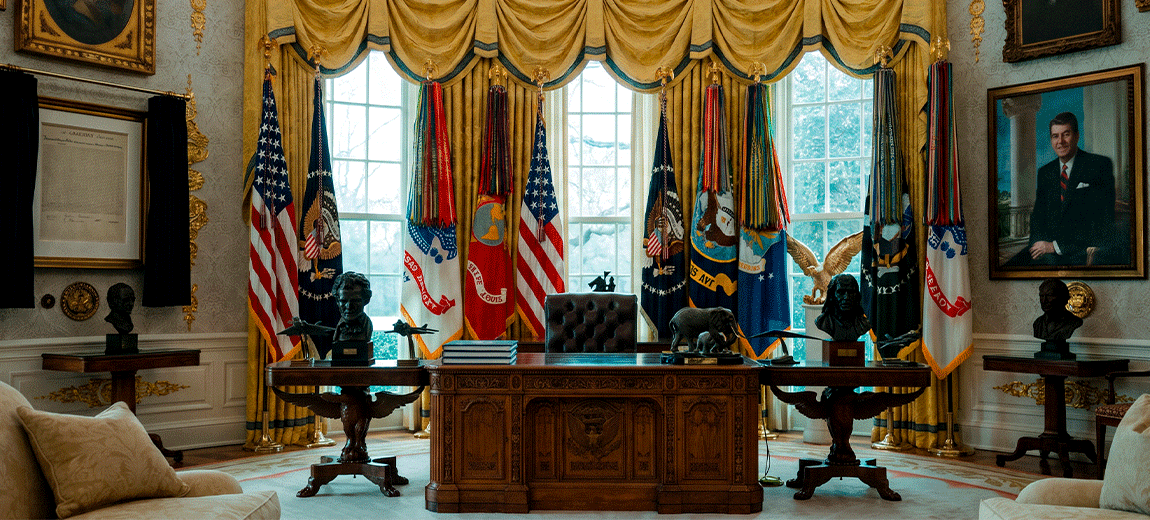
Today, most of us are frustrated.
We’re disappointed when another leader’s promise is broken. We’re upset as recent presidents enrich themselves while everyday Americans struggle. We’re irritated by executive overreach that ignores the Constitution.
We’re shocked as pardons flow to political supporters, friends, and family like party favors. We’re concerned about trillion-dollar deficits burdening our children and the generations to come.
We try not to be vindictive. We have every right to want better.
Here’s our choice: We can let our frustration harden into anger and destruction, or we can focus it on restoration. We can divide, isolate, and hate - or we can come together on the core truths we share and rebuild what works.
The difference between these two paths? Our freedoms and about 100 million American lives, if history is our guide.
Let’s start building the second path together.
It begins with a different kind of question. Not “Who do we blame?” but “What if?”
Here are seven “What If” questions about presidential leadership. Not fantasies. Not partisan talking points. Just common-sense standards that any American - left, right, or center - can rally behind.
#1 - WHAT IF… Character Actually Mattered?
What if we elected a President who was a person of good character, totally committed to doing what’s best for the long-term common good of all Americans - and who would not do anything for personal or family profit while in office?
Imagine a president who divested completely from business interests. Who would not allow themselves to profit from policy decisions. Who viewed the presidency as a sacred trust - rather than a tool to increase their wealth and the power of family and friends.
This is not revolutionary. It is a basic cornerstone of our Declaration of Independence and Constitution - of all great leaders. The office of President was never meant to be a money-making opportunity or a chance to behave like a king.
George Washington served two terms as president and then gladly returned to his farm. He didn’t leverage his presidency to enrich his family. Many of our other presidents followed his example - until recently.
What if we demanded the same today?
What if we made it clear that any hint of self-dealing disqualifies someone from office? We voted based on character over party.
What if good character - real, regularly demonstrated, unwavering good character - became our first and non-negotiable requirement?
ENDNOTES: 1-3
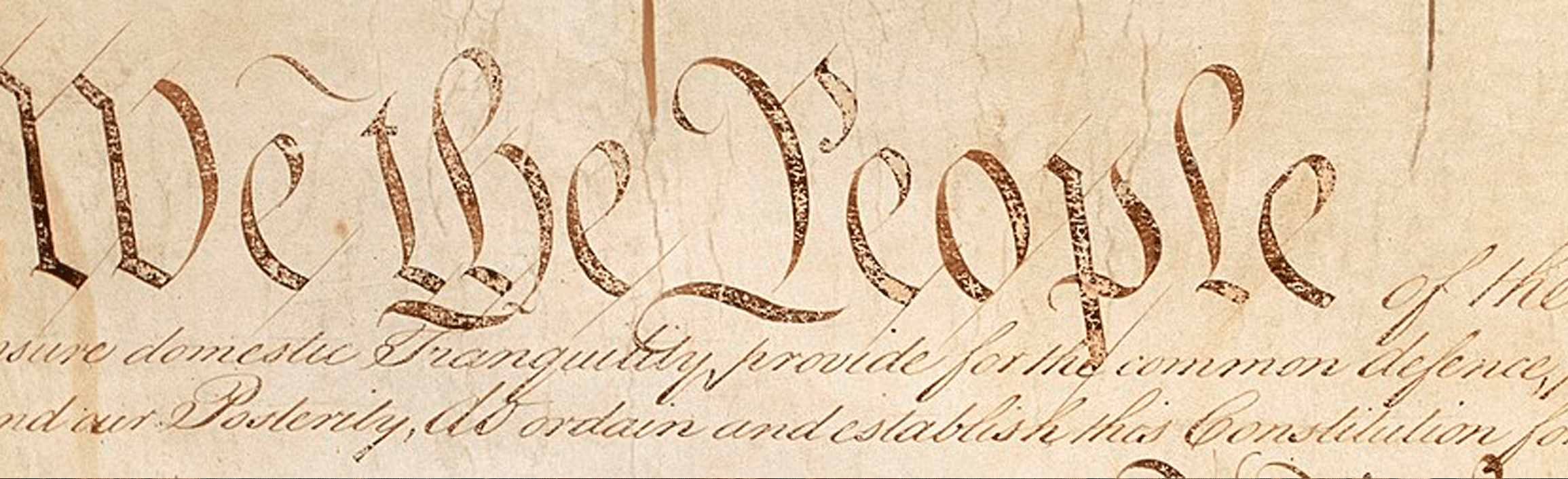
#2 WHAT IF… The President Led Us To Operate Within The Constitution?
What if our presidents limited all actions of each branch of the federal government to operate solely within Constitutional law - not stretching it, not reinterpreting it for convenience, but actually following it?
The Constitution isn’t a suggestion. It’s not a set of guidelines to be honored when politically expedient and ignored when inconvenient. It’s the supreme law of our land, and the President’s first oath is to “preserve, protect, and defend” it.
What if we held them to that oath?
What if we immediately, peacefully, respectfully but firmly challenged - through our representatives and courts - any presidential action that exceeded Constitutional authority?
What if we stopped cheering when “our side” bends the rules, but instead insisted nobody gets to bend them?
The Constitution protects all of us.
When any President violates it, they threaten every American’s rights - not just their political opponents.
ENDNOTES: 4-6
#3 WHAT IF… Executive Orders Served Laws, Not Ambitions?
What if the President limited their use of Executive Orders to fulfilling laws passed by Congress and responding to true national emergencies - not circumventing the legislative process or imposing a personal agenda?
Executive Orders were never meant to function as substitute legislation. They exist to help the President execute the laws Congress passes, and respond to genuine crises when immediate action is necessary.
What if we returned to that original purpose?
What if presidents couldn’t use Executive Orders to do an end-run around Congress when they don’t have the votes?
What if each Executive Order had to cite the Congressional law it implements or the Constitutional emergency provision it invokes?
What if Congress could challenge any order and escalate it to the Supreme Court with a two-thirds vote?
And what if we ended the pardon abuse entirely through constitutional amendment - requiring Senate approval for each pardon, one at a time?
No more blanket pardons for 1,500 people. No more pre-emptive pardons for family members who haven’t been convicted - but possibly should be.
Just case-by-case mercy for truly deserving individuals.
ENDNOTES: 7-9

#4 WHAT IF… Fiscal Responsibility Was Required?
What if the President worked as a partner with Congress to shrink the size and scope of the Federal government to be consistent with our Constitution - and committed to operating at a financial surplus, so that total federal debt decreased every single year?
Our national debt was $38.4 trillion as of December 2025. It was about $5.6 trillion in the year 2000.
What happened?
No accountability - from voters, then elected officials, the judicial branch, and bureaucrats. The problem with accountability starts with American citizens who vote.
The contrast is stark: Prior presidents did their best to limit federal government debt. Today’s presidents leave us bankrupt. Most of our presidents sacrificed themselves to serve the common good. In recent decades, our presidents seem more focused on serving themselves.
Which legacy do we want for our children?
This is not a political talking point. It’s a catastrophe we’re handing to our children, grandchildren, and future generations.
Debt cripples our ability to maintain our nation’s infrastructure, provide true equal opportunity (not stuff) for all, and defend our nation.
Both parties have spent recklessly for decades, buying votes with borrowed money.
What if the next President said, “No more.”
What if they presented budgets that had a budget surplus?
What if they worked with Congress to eliminate redundant agencies, removed unnecessary laws, consolidated other laws, cut ineffective programs, and return responsibilities to states and communities as the Constitution intended them?
What if we passed laws that no elected official would be paid compensation or benefits, including travel and entertainment reimbursements, unless the federal budget was operating at a surplus?
This would require courageous good character, wisdom, and collaboration. Some programs would end. Some benefits would be reduced. Some people would be angry.
This decision is clearly for the common good of all Americans.
What if we finally had a President with enough integrity and courage to tell us the truth: We can’t borrow forever, hard choices are necessary, and fiscal responsibility is an act of loving, courageous good character for future generations?
ENDNOTES: 10-12

#5 WHAT IF… Education United Rather Than Divided Us?
What if the President worked with Congress to establish educational standards for all schools - public, private, and home schools?
Simple, basic requirements for all educators to develop citizens who know our true history, how our government works, and their responsibilities as citizens - grounded in the Declaration of Independence that birthed our nation and the Constitution that established our republic.
What if we trained each new generation how to have good character, share common values, and commit to responsibly extend America’s freedoms into the future?
We currently rank 28th among developed nations - 34th globally. We’re failing our children. We’re failing our nation, just as every great civilization that collapsed has done for thousands of years.
Isn’t it time we learned from history and restored our republic before it’s too late?
Billionaire Ray Dalio has studied the rise and fall of civilizations. In his book Principles for Dealing with the Changing World Order, he identifies six stages of every world power. The sixth is when it falls apart. He concludes America is late in stage five, and rapidly entering stage six.
Education is the long game to restore us - but one that needs our immediate attention. Shortcuts won’t save us. History has proven repeatedly that the only way to sustain a great nation is by training up the next generation.
We have failed to do this. That failure is the core of our disunity today.
NOTE: Rome didn’t fall because of external enemies. It collapsed because it stopped teaching the next generation what made Rome great, and stopped holding adults accountable to those proven standards. The barbarian invasions were symptoms, not the cause.
Our failure isn’t from lack of funding - we’ve wasted trillions funding schools that replaced teaching American truth, character, civics, and unity with the opposite:
Moral relativism, socialist redistributionist ideology, and historical revisionism that distorts the facts about our founders and our structure of government.
One result of this agenda is measurable and frightening: The share of college students who say it can be acceptable to use violence to shut down a campus speaker has climbed from 20% in 2020 to 34% today.
This is our fault as citizens and voters. We failed to elect people of good character. We failed to hold politicians accountable. We failed to develop character in our own families.
History offers us a choice: Learn from Rome’s collapse, or repeat it. Unite around shared values, or fragment into tribalism. Teach the next generation what makes us great, or watch tyranny fill the vacuum.
The evidence is clear. The choice is ours - the regular guys, average joes, commoners.
Every successful civilization has been built on a core set of shared values that unite its people. When that foundation erodes - when feelings replace “the Laws of Nature and of Nature’s God,” and bullies sell the lie that all truth is relative - a vacuum forms.
History proves these vacuums never stay empty. What fills them is never peace or prosperity. It always ends the same way:
France’s rejection of all moral authority during the Revolution led to the Reign of Terror and eventually Napoleon’s dictatorship (1789). It is estimated these tyrants were responsible for the deaths of 5-7 million people.
Russia’s abandonment of traditional values created the chaos that gave rise to Communism and Stalin’s purges (1917). It is estimated Stalin was responsible for the deaths of 20-40 million people including famines.
Weimar Germany’s moral relativism and economic chaos opened the door for Hitler’s totalitarianism (1933). It is estimated Hitler was responsible for the deaths of 11-17 million people.
China’s Cultural Revolution destroyed traditional Confucian values, creating a vacuum filled by Mao’s brutal ideology and today’s surveillance state (1949). It is estimated Chairman Mao was responsible for the deaths of 40-80 million people.
More recently, Venezuela’s erosion of constitutional limits and shared civic values enabled Chavez and Maduro’s authoritarian socialism (1999). It is estimated these tyrants were responsible for the deaths of 300,000-500,000 people and 8 million fled the country.
Over 150 million deaths in those countries. Five different continents. Same pattern: Abandon shared values → chaos → tyranny.
America isn’t immune. We’re just the next global power in line to fail - if we don’t wake up now.
Education is a key cornerstone to protect us commoners from tyrants.
Nations either unite around principles that protect human dignity, or they fragment into tribalism and submit to whoever seizes power.
The genius of America’s founders was taking Judeo-Christian principles - human dignity, unalienable rights, moral accountability, limits on power - and building them into a civic framework that protects everyone equally, regardless of heritage, age, or peaceful faith.
You don’t have to believe in God to benefit from a system that says your rights come from your humanity, rather than government permission. America’s foundation requires a commitment to peaceful “cultural Christianity” - honoring the values that produce freedom and justice for all, whether you follow Jesus, the Jewish Torah, or neither.
Today, even prominent atheists are calling themselves cultural Christians because they recognize the value of Judeo-Christian principles in protecting freedom and human dignity.
What if we returned to teaching our children that America is the nation President Abraham Lincoln summarized as, “…of the people, by the people, and for the people.”
Freedom does not exist on its own. It requires gratitude, responsibility, commitment, and an investment of time.
This isn’t about federal control of curriculum. It’s about advancing our nation through baseline standards that unite every child around the true facts of American history - our Declaration of Independence, our Constitution, and a transparent, fair, factual exploration of our greatest successes and failures.
Teaching our children who we are as one nation, where we came from, and how we move forward together is the foundation.
Only then can we develop in them the courageous good character, commitment to equal rights, and dedication to the common good that our republic requires to thrive.
What we’ve heard is true: United we stand. Divided we fall.
ENDNOTES: 13-16
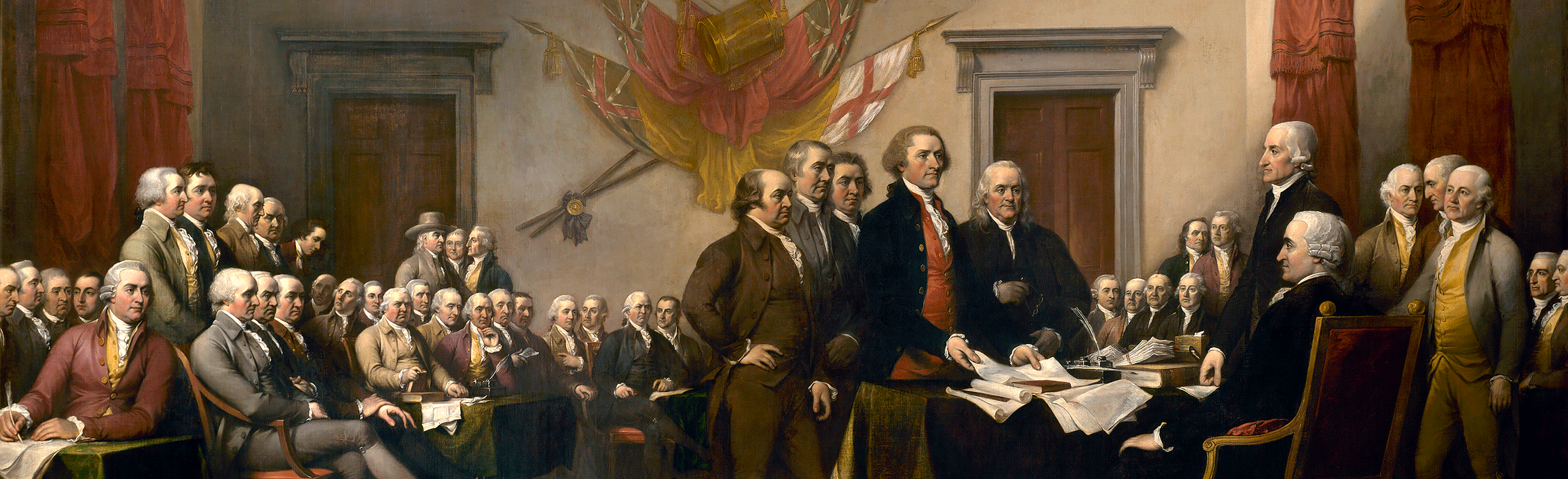
#6 WHAT IF… America Led Through Strength AND Wisdom?
What if the President worked with our global allies to maintain peace through wisdom, long-term vision, strategic fortitude, and mutual success - while being a responsible steward of American resources and lives?
What if America was first a role model of good character, showing others how we can prosper together rather than tell them how to live their lives or get involved in their battles?
Being America’s top executive does not mean our president is leading a kingdom or empire. It doesn’t mean acting as the world’s police force or writing blank checks to every nation that asks.
It also doesn’t mean isolationism or abandoning the alliances that have prevented major wars for nearly 80 years.
What if we pursued a foreign policy grounded in wisdom based on historical facts rather than ideology?
What if we strengthened alliances based on shared values and mutual benefit?
What if we were willing to lead, but demanded that our allies contribute their fair share?
What if we measured success not by how much we spend or how many bases we have, but by the success of peace and prosperity we support with our allies?
What if the President approached global challenges with the understanding that long-term vision often means short-term restraint?
Get this wrong, and we repeat Vietnam, Iraq, Afghanistan - endless wars that drain resources and lives without victory - or we retreat into isolationism and watch allies fall to autocrats who won’t hesitate when we need help.
The middle path - strength with wisdom - is harder. It’s also the only one that works.
ENDNOTES: 17-19
#7 WHAT IF… The President Was a Role Model For Our Values?
What if the President was a consistent role model for the three core values and nine virtues of what I call, Simple Liberty?
The Three Simple Liberty Core Values, each with three supporting virtues from the ancient Stoics and religions:
Courageous Good Character (faith, truth, integrity)
True Equal Rights for All (valuing life, liberty, covenant)
Humble Work for the Common Good (gratitude, responsibility, family)
What if we expected our President to demonstrate these in word and deed? Not flawless - we’re all human - but a genuine commitment to daily sincerely demonstrate these values publicly and privately?
What if the President behaved in a civil manner at all times? Past presidents did this.
What if they spoke truth even when politically costly?
What if they showed integrity when it would be easier to compromise?
What if they approached every decision with gratitude for the privilege of serving?
What if they took personal responsibility for mistakes - theirs and those of their people - rather than blaming others?
What if they honored family and encouraged all Americans to do the same?
Character matters. Values matter. When the person in our highest office consistently demonstrates them, they inspire all of us to do the same.
ENDNOTES: 20-22
This is the first in a series of posts exploring Simple Liberty - a non-partisan, values-based framework for America to continue as a free, independent nation.
In our next post, we turn from the one to the many - Congress, the branch built to represent us. After that, the Courts. Each branch has lost its way. Each can be restored.
Only by us - the commoners - the heart and soul of America.
The Mountain Ahead
Let’s be candid: These seven standards are a mountain to climb. They call for a President of rare character - someone willing to spend political capital, absorb fierce criticism, and disappoint even their own supporters to do what is right.
It has been done before. Washington, Lincoln, Eisenhower - imperfect people who chose service over self. It can be done again.
Only if we, the citizens, demand it - and only if we show up to choose.
We decide who sits in that chair.
The largest bloc in America is not the left or the right. It is the people who stayed home.
In 2024, roughly 89 million eligible Americans did not vote - more than voted for either candidate for President. The single most powerful force in this country sat on the sidelines, convinced their voice did not matter.
They were mistaken.
Their vote matters. Your vote matters. My vote matters. Together, we choose the character of the person in the Oval Office.
That choice is far closer than most people think. The presidency has turned on a whisper: 537 votes in Florida decided 2000. About 78,000 votes across three states decided 2016. Some 43,000 across three states decided 2020. Roughly 230,000 across three states decided 2024.
In every one of those states, the citizens who stayed home vastly outnumbered the margin of victory. The non-voters did not just sit out those elections - they could have reversed them.
The ruling class is counting on that silence. It has for over a century.
The answer is not violence or civil war.
Recall the stakes we opened with - our freedoms, and, if history is our guide, about 100 million lives.
The people who profit from our division would love nothing more than for citizens to turn on one another; it would be their excuse to seize more power and strip away our freedoms. We will not give them the satisfaction.
The answer is older, harder, and far more powerful: We engage - neighbor to neighbor, voter and non-voter alike - with truth, hope, integrity, and transparency.
We refuse to vote for anyone - of any party - who will not place the common good above their own. We stay informed. We discuss candidates and issues with civility, even when it is uncomfortable. We hold whoever wins to the standard - peacefully, but relentlessly.
Remember: The President sets the tone for everything else. Get this one right, and the rest becomes possible. That is why we began here.
This is the quiet revolution the Founders built the ballot box to carry. Not rage - just passionate, civil, grateful resolve with courageous good character.
The cost is small - a little of our time, attention, and action. Now is time for the people - the citizens of this blessed country - to show up as responsible stewards of our freedom and close the door in tyranny’s face.
We can do this.
This completes our seven questions for the Executive branch - the branch that enforces the law. Next come seven more, for Congress - the Legislative branch designed to represent us by making just laws. Each branch has lost its way. Each can be restored - by us.
P.S.
The only hope for America is to restore our covenant to common values, our federal government’s wise three-branch design, and the founding solutions we have abandoned or allowed to be corrupted. Not socialism, communism, a dictatorship, or a monarchy.
A republic where there are true equal rights for all.
Renewal requires us to strengthen our character, protect our rights, and gratefully steward the people’s government for the common good.
Simple Liberty unites everyday Americans to research the facts behind our nation’s biggest problems and develop solutions for the common good - because politicians and billionaires won’t do it for us.
ENDNOTES
These references are meant to introduce you to the data, not provide every source. We encourage you to explore more on your own, and welcome your submissions as comments on this post.
#1 - WHAT IF… Character Actually Mattered?
(1) Academic Research on Presidential Character
The Presidential Character: Predicting Performance in the White House (1972, updated 1992), James David Barber. Barber’s landmark study found that a president’s character and values are the most reliable predictor of their performance in office - more reliable than policy positions or political experience. | https://api.pageplace.de/preview/DT0400.9781000727166_A38585067/preview-9781000727166_A38585067.pdf
(2) Public Opinion Research
YouGov/Quarterdeck Poll (2024): 88 percent of Americans rated leadership skills and decision-making as “very important” for a president, followed by honesty at 86 percent. Americans consistently say character matters - yet our election choices haven’t always reflected it. | What do Americans want in a president? Taylor Orth, July 31, 2024 - https://today.yougov.com/politics/articles/50225-what-do-americans-want-in-a-president
(3) Constitutional & Ethics Framework
Strengthening Presidential Ethics Law, Brennan Center for Justice, Daniel I. Weiner, December 13, 2017 | The president and vice president are exempt from federal conflict of interest rules that prohibit other officials from participating in government matters where they have a financial interest - a loophole no other democratic nation grants its chief executive. | https://www.brennancenter.org/our-work/policy-solutions/strengthening-presidential-ethics-law
#2 WHAT IF… The President Led Us To Operate Within The Constitution?
(4) Constitutional Foundation
Presidential Power Surges, Erin Peterson, Harvard Law Today, July 17, 2019: How have U.S. presidents found ways to expand their powers to achieve their goals? The framers were particularly focused on constraining presidents. The Constitution’s limits on presidential power were deliberate and specific. | https://hls.harvard.edu/today/presidential-power-surges/
(5) Historical Pattern of Overreach
The Use and Abuse of Executive Orders and Other Presidential Directives (2001–2002), legal memorandum, Todd F. Gaziano, former Director of the Center for Legal and Judicial Studies. Discusses the constitutional basis, historical practice, and reform potential of presidential directives. | https://www.heritage.org/political-process/report/the-use-and-abuse-executive-orders-and-other-presidential-directives
(6) Balance of Powers
Emergency Powers: A System Vulnerable to Executive Abuse, Brennan Center for Justice, December 15, 2023. “In a functional system of emergency powers, Congress delegates extraordinary authority to the President, but retains the ability to curtail that authority if the President abuses it. In our current system, Congress plays far too weak a role.” The balance of power has dangerously shifted away from Constitutional design. | https://www.brennancenter.org/our-work/analysis-opinion/emergency-powers-system-vulnerable-executive-abuse
#3 WHAT IF… Executive Orders Served Laws, Not Ambitions?
(7) Executive Order Constitutional History
President or King? The Use and Abuse of Executive Orders, Notre Dame Law Review, Tara Brown, February 27, 2015 - “The Constitution does not include any reference to executive orders, and therefore neither authorizes their use nor demarcates their limitations” - meaning presidential discipline and congressional oversight are the only real checks on executive order abuse. | https://scholarship.law.nd.edu/jleg/vol28/iss1/1/
(8) Bipartisan Pardon Reform Legislation
Nine Solutions for Political Corruption - A new era of anticorruption reform is long overdue, Daniel I. Weiner, Joanna Zdanys, Eric Petry, Brennan Center for Justice, January 20, 2026 - In February 2026, Congressman Johnny Olszewski (D-MD) announced bipartisan support from Congressman Don Bacon (R-NE) for the Pardon Integrity Act - a proposed constitutional amendment establishing new checks on presidential pardon authority. The bill would require congressional notification within three days of any pardon, with authority for Congress to nullify the pardon within 30 days. | https://www.brennancenter.org/our-work/research-reports/nine-solutions-political-corruption
(9) Congressional Research Service, Presidential Pardons (Library of Congress)
Presidential Pardons: Overview and Selected Legal Issues, Michael A. Foster, 21 page PDF, January 14, 2020 - https://www.congress.gov/crs-product/R46179
#4 WHAT IF… Fiscal Responsibility Was Required?
(10) United States Congress report
National Debt Hits $38.40 Trillion, Increased $2.23 Trillion Year over Year, $6.12 Billion Per Day, U.S., Congress Joint Economic Committee Republican, December 5, 2025 - “…net interest has almost tripled over the last five years and the Congressional Budget Office forecasts that net interest as a share of outlays will be 13.85 percent in FY2026…” | https://www.jec.senate.gov/public/index.cfm/republicans/2025/12/national-debt-hits-38-40-trillion-increased-2-23-trillion-year-over-year-6-12-billion-per-day
(11) CBO Data
The Runaway Federal Debt - The National Debt Is Now More Than $35 Trillion. Soon, Interest Payments Will Become The Largest Spending Category In The Entire Federal Budget, And There Are No Signs Of That Changing Anytime Soon, Michael Lucas, August 2, 2024 - The federal debt is increasing at a rate of $330 million per hour - $7.9 billion per day and $2.8 trillion per year. Per person, the share of federal debt is more than $100,000 and $265,000 per taxpayer. In 2023, the credit rating of U.S. debt was downgraded from AAA to AA+ - only the second time in U.S. history. | https://www.maciverinstitute.com/research/the-runaway-federal-debt NOTE: End note #10 is more current data - a higher number.
(12) Fortune Magazine - Ray Dalio interview
Ray Dalio says ‘a little bit of everything’ is needed to prevent a debt crisis - but it won’t happen anyway, Eleanor Pringle, December 5, 2025 - Bridgewater Associates founder Ray Dalio has described the debt scenario as an economic “heart attack,” with government investment squeezed out by the need for the country to maintain its debt obligations. Younger people will face the sharpest end of that outcome. | https://fortune.com/2025/12/05/ray-dalio-debt-crisis-bipartisan-agreement-outlook/
#5 WHAT IF… Education United Rather Than Divided Us?
(13) PISA 2022 International Assessment Data (OECD)
PISA 2022 Results (most recent year): American students scored an average of 465 points in mathematics, placing the US 34th globally among 81 participating countries and 28th among 37 OECD member nations - below the OECD average of 472 points. Only 7% of US students qualified as top performers in mathematics. | https://www.oecd.org/en/publications/pisa-2022-results-volume-v_c2e44201-en.html
(14) U.S. Chamber of Commerce Foundation
Recent International Assessment Scores Mark Worrying Trend in U.S.’ Global Competitiveness, Caitlin Codella Low, December 15, 2023 - America is lagging behind many other countries, especially in math, jeopardizing our economic competitiveness and workforce strength. The Chamber notes this decline is occurring despite substantial per-student spending, suggesting systemic issues rather than funding gaps. | https://www.uschamberfoundation.org/education/recent-international-assessment-scores-mark-worrying-trend-in-us-global-competitiveness
(15) Civic Education Research
America’s Educational Decline and the Erosion of Global Leadership, A. David Beaman, PhD, News and Politics - Substack, May 24, 2025 - A 2023 Gallup survey found that only 36% of Americans have confidence in higher education, a significant drop from 57% in 2015. A Pew Research Center study indicated that 49% of Americans believe a four-year college degree is less important today than it was two decades ago. Meanwhile, international competitors are strengthening their educational systems specifically to challenge American economic leadership. |
(16) Student Attitudes Toward Political Violence
College students increasingly believe violence is justifiable to stop speech, Greg Lukianoff, Foundation for Individual Rights and Expression (FIRE) / College Pulse, September 2025 - A nationwide survey found that 34% of college students believe using violence to stop a campus speech is acceptable in some cases, up from about 1 in 5 in 2020 - roughly a 50% increase in five years. | https://www.thefire.org/news/student-acceptance-violence-response-speech-hits-record-high
#6 WHAT IF… America Led Through Strength AND Wisdom?
(17) 50 Year Review, University of Reading, UK
Vietnam war: how US involvement has influenced foreign policy decisions over 50 years, Mara Oliva, University of Reading, January 11, 2023 - Academic analysis by Associate Professor Mara Oliva documenting how Afghanistan Papers showed the US “lacked realistic objectives and a clear exit strategy” - mirroring Vietnam failures. Officials in both Bush and Obama administrations “deliberately misrepresented conditions in Afghanistan.” | https://research.reading.ac.uk/research-blog/2023/01/11/vietnam-war-how-us-involvement-has-influenced-foreign-policy-decisions-over-50-years/
(18) Foreign Policy Review
Isolationism vs. Interventionism: America’s Forever Foreign Policy Debate, GovFacts, December 6, 2025 - Analysis of both extremes and why “neither pure isolationism nor pure interventionism has ever fully dominated American policy” - directly supporting your “strength with wisdom” middle path argument. | https://govfacts.org/policy-security/isolationism-vs-interventionism-americas-forever-foreign-policy-debate/
(19) Academic Review, Cambridge University Press
Allies and Access: Implications of an American Turn Away from Alliances (Cambridge University Press / International Organization) Peer-reviewed research documenting how every major US military operation since WWII depended on allied access - showing isolationism would “dramatically raise costs and lower effectiveness” of American defense. | https://www.cambridge.org/core/journals/international-organization/article/allies-and-access-implications-of-an-american-turn-away-from-alliances/BA2C68EC01AFAB82DE7296936BF0229B
#7 WHAT IF… The President Was a Role Model For Our Values?
(20) Relationship to U.S. Constitution
Civic Virtue, and Why It Matters, Jackie McDermott, National Constitution Center, February 20, 2020 - Scholars from the American Enterprise Institute and Lawfare directly address why the president must model civic virtue - not just for the republic, but for ordinary citizens. Individual self-government and public self-government are “two deeply interwoven themes” - a president who fails to govern himself morally undermines the entire constitutional framework of self-governance. | https://constitutioncenter.org/blog/civic-virtue-and-why-it-matters
(21) Peer Reviewed Research
The Impact of Role Models, Mentors, and Heroes on Academic and Social Outcomes in Adolescents, Hamna Atif , Lindsey Peck , Mary Connolly , Kodi Endres , Leah Musser , Mariam Shalaby , Morgan
Lehman , Robert P. Olympia, Cureus, July 27, 2022 - Peer-reviewed medical research published in the NIH’s PubMed Central. Conclusion is the behavior of the most visible adult in America - the President - is absorbed subconsciously by children, whether it be dishonesty, vulgarity, or self-dealing; or integrity, courage, and service. | https://assets.cureus.com/uploads/original_article/pdf/104192/20220829-25328-2tez66.pdf
(22) NIH Behavioral Sciences
Effects of Moral Elevation on Children’s Implicit and Explicit Prosociality: Evidence from Behavioral and Physiological Responses, Qin Wang, Xia Zhou, Lei Xun, Editor: Sylvia Terbeck, September 12, 2025 -
Research shows that “moral elevation” - the positive emotional response children experience when witnessing virtuous acts - activates measurable prosocial behavior in children. Therefore, a president who consistently demonstrates courageous good character, humility, and service to the common good doesn’t just set a nice example - he or she triggers a measurable, lasting shift in how children behave and what they value. | https://pmc.ncbi.nlm.nih.gov/articles/PMC12467581/pdf/behavsci-15-01246.pdf