
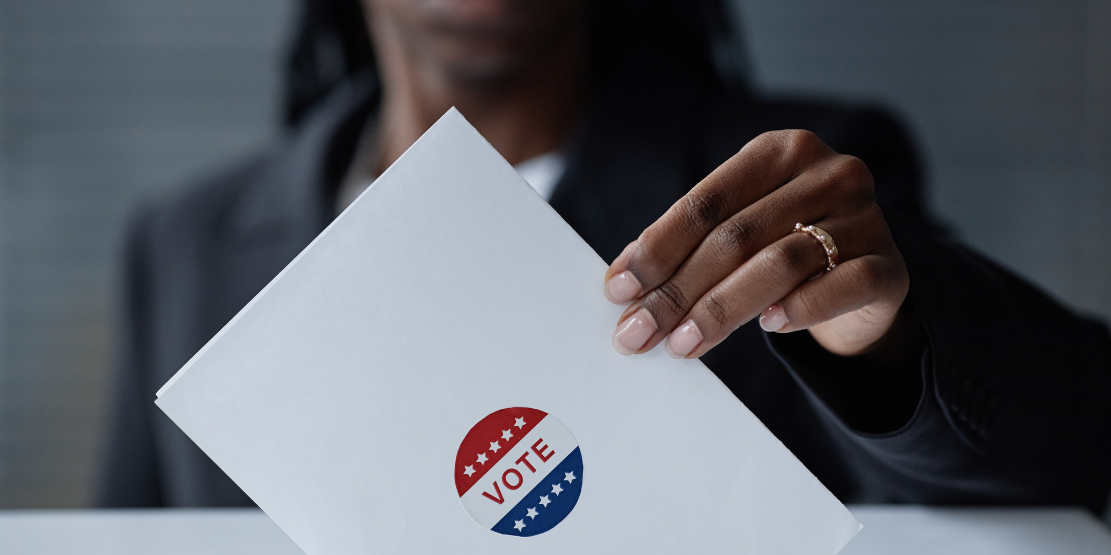
What Is Best for the Common Good?
NOTE: Evidence is referenced by its permanent number in brackets - for example, [A-000158] - and can be found in Q2 | Evidence.
I. Recap
Q1 | MEANING
This claim proposes one national standard of voter eligibility: Only United States citizens may vote in any American election - federal, state, or local.
Federal elections are already citizens-only under federal law; no state permits noncitizen voting statewide. What remains open is local, where the District of Columbia and a small number of municipalities allow noncitizens to vote in some local contests.
This claim closes that gap and makes the standard uniform and permanent.
Q2 | EVIDENCE
Our registry holds 73 facts: 23 Affirming, 12 Dissenting, and 38 Neutral. Fact numbers are permanent and global - the same fact carries the same number in every claim where it appears - and every fact links to its end source so you can check it yourself. Our conclusions appear in Q3 and Q4.
Q3 | IMPACT
The six sub-claim results, in one line each:
SC-1 - Voting is properly reserved to citizens, as both a benefit and a responsibility of citizenship. The founding design, the constitutional text, and the Supreme Court treat the electorate as the political community of citizens.
States currently have the right to allow noncitizens to vote, but most that allowed it have since rescinded it.
SC-2 - Noncitizen voting is lawful today in a number of local jurisdictions, and noncitizens have been registered and have voted elsewhere by error or by fraud.
Lawful local noncitizen voting exists in roughly sixteen to nineteen jurisdictions, and error cases keep surfacing. The scale today is small, but could grow substantially.
SC-3 - Noncitizen voting is small today, but it can expand through fraud or administrative failure to a scale that decides local elections.
No election result has been known to change based on noncitizen voting, but errors recur and identity fraud keeps getting cheaper and easier. This is forward-looking risk prevention.
SC-4 - A citizens-only law does not wrongly block eligible citizens.
No burden on current voters: The one measured study of an added requirement found no turnout effect.
SC-5 - The law can be enacted lawfully by one of three routes: By Congress for Washington DC, by each state for its own state and local elections, or by constitutional amendment for all elections.
Correct.
SC-6 - The benefit justifies the cost and effort.
The cost and effort to implement this claim is minimal because it changes who is eligible, not what any voter or election office does. Voters have approved citizens-only ballot measures in fifteen states, averaging 73 percent support.
UNKNOWNS
The open questions from Q3 | Impact, Section VII, carry into this solution. Chief among them: No national poll tests this claim as written - the fifteen state ballot measures are the closest direct evidence - and participation where noncitizen voting is lawful is thinly documented. None of these blocks the verdict; each is noted where it bears.
II. Solution
OBJECTIVE: What’s best for the common good?
America belongs to its citizens - and the door to citizenship is open to qualified immigrants. The Constitution gave Congress the power to make citizens of foreigners,[N-000181] and the Declaration of Independence counted the Crown’s obstruction of that path among its grievances.[N-000184]
The founders’ design was a nation that welcomes newcomers who want to assimilate into our communities, and reserves the owners’ decisions to citizens.
The Supreme Court long ago called the vote “preservative of all rights” - the one right that protects every other.[N-000063] Citizenship is the deed of ownership; elections are the meetings where the owners decide the future of the home they share.
American government was designed with checks and balances that temper passion with reason. If local elections run under different eligibility standards, each city defines its own political community with no nationwide check. A single national standard - only citizens vote - is the foundation of that system. Which approach best serves the common good is the question this section answers.
Our verdict: The facts support this claim as beneficial for the common good of all Americans. One standard - only citizens vote, in every election - should become law, by the lawful routes and with the safeguards below built into it.
THE CONSTITUTIONAL ROOM
The Supreme Court has marked the boundaries this claim lives within: Citizenship does not by itself confer the right to vote,[N-000198] the franchise is conferred by the states within constitutional limits,[N-000199] and while state classifications based on alienage are inherently suspect,[N-000200] the Court’s political-function doctrine expressly permits reserving the processes of self-government to citizens.[N-000201]
Restricting the vote to citizens is the baseline the Court’s own cases assume and expressly permit.
WHAT THE LAW MUST INCLUDE
The evidence dictates how this law must be written. Every requirement below comes from the record:
One standard for every election - federal, state, and local. Federal law set the baseline in 1996;[N-000047] this claim extends it to all American elections.
Pair the rule with the path. Every jurisdiction ending noncitizen voting owes its affected residents two things: Direct notice of the change, and clear information on how to become a citizen - the founders’ remedy was the open door.[N-000181, N-000191 through N-000194]
Enacted only by the lawful routes - state constitutional amendments for state and local elections, Congress for the District of Columbia under its Article I authority,[A-000165] and a U.S. constitutional amendment to bind every election. Never by executive order - the courts have already blocked that path.[N-000052]
No new burden on any voter. This claim changes who is eligible, not what a voter does. Verification - how we know - belongs to the dependency claims, and the one measured study of an added requirement found no turnout effect.[A-000162]
Respect the method constraints. A state may not unilaterally add documentary proof-of-citizenship to the federal registration form; that holding constrains the dependency claims, and Congress’s pending SAVE Act is the federal version of that work.[N-000051]
III. The Draft Texts
MODEL TEXTS - FOR EDUCATION AND PUBLIC DISCUSSION. These are not filed measures. They are teaching drafts in plain language, one for each lawful route. Voters in fifteen states have already approved language like the first;[A-000166, A-000050] six more states vote on it in 2026.[N-000190]
A. For a State - Model Constitutional Amendment
Only a citizen of the United States, who meets the age and residency requirements of this constitution, may vote in any election held in this State or in any of its political subdivisions.
One sentence does the work. The operative change in every approved state measure has been the same: From “every citizen may vote” to “only a citizen may vote” - closing the local option while changing nothing else about who votes today.
B. For the District of Columbia - Model Act of Congress
Section 1 - Name. This Act may be called the District of Columbia Citizen Voter Act.
Section 2 - The Rule. Only a citizen of the United States may vote in any election held in the District of Columbia. Any provision of District law permitting noncitizen voting is repealed.
Section 3 - Authority and Effect. Congress enacts this Act under its constitutional authority over the District.[A-000165] It takes effect at the first regularly scheduled District election held one year or more after enactment, with direct notice to every registered voter affected.
C. For the Nation - Model U.S. Constitutional Amendment
Section 1. Only a citizen of the United States may vote in any election held in the United States or in any State or political subdivision thereof.
Section 2. This article does not alter any qualification of age, residency, or registration lawfully established.
Section 3. Congress shall have power to enforce this article by appropriate legislation.
This amendment follows the pattern of the Fifteenth, Nineteenth, and Twenty-Sixth: It makes one eligibility rule national and permanent, while elections remain administered by the states.
Section 3 is the Constitution’s own settled enforcement formula, used in seven amendments.[N-000208] Congress may add legislation to protect the rule - it cannot change it - and the states continue enforcing through their election laws.
IV. Implementation
Simple Liberty Foundation is an educational organization. We research, publish, and teach. We do not lobby or endorse candidates. This research is a first step in public education on this claim. The next steps are:
Engage with individuals - Simple Liberty Members and others - in civil dialog on the facts of this Claim, to sharpen the key details.
Study and engage with organizations that came before us with similar proposals to further consider their research and results.
Publish, as education for the people and their representatives:
The model texts above, refined by what we learn;
A constitutional analysis - how federal and state responsibilities align best for the common good;
What each measure specifically requires, who implements it, and on what schedule; and
A list of laws that become unnecessary - and can be repealed - if it passes.
Whether to act on this education belongs where it always has: With the people and those they elect. Therefore, once this process is complete, the people must drive change with their elected representatives.
V. Status
In public discussion. (September 2026)
VI. Solution Dependencies
This claim draws the boundary: Only citizens vote. A boundary needs enforcement - New Jersey and Oregon proved that prohibition without verification fails, when system errors put thousands of noncitizens on the rolls despite the law.[A-000059, A-000060]
Three sets of claims do the verification work this claim depends on:
Citizenship must be provable. A citizens-only rule works only if officials can confirm who is a citizen. Every adult maintaining a current government-issued photo ID that verifies citizenship status (Claim #01-004-001), confirmed through a national identification database (Claim #01-004-004 - pending), gives election officials that answer.
Voter rolls must be accurate, with citizenship confirmed at registration. The rolls are where noncitizens enter by error or fraud, and where they stayed for years in New Jersey.[A-000059] Accurate roll maintenance (Claim #04-003-004) and one-time re-registration (Claim #04-003-005) clean the record this claim relies on. Registration still runs on the applicant’s own attestation of citizenship - the honor system this dependency replaces.[A-000009]
Identity must be verified at the time of voting. The boundary reaches the ballot only if the person voting is the registered citizen. Government-issued photo ID and signature verification (Claim #04-003-002) provide that check in person, and mail-in ballots must meet the same standards (Claim #04-003-003).
How they combine for the common good:
This claim answers who may vote. The dependency claims answer how we know.
At all three checkpoints - the ID, the rolls, and the polls - “only citizens vote” must be enforced. This claim is only effective when there is accountability at each one.
This completes the full 4Q review of this claim.
Discuss this claim
Become a monthly or annual donor member to start commenting.
Become a Member